NASA Eyes September Launch for New Cosmic Explorer


Eda Kaplan
NASA is gearing up for an early September launch of the Nancy Grace Roman Space Telescope, a powerful new observatory set to revolutionize our understanding of the cosmos. With a field of view 100 times larger than Hubble's, Roman promises to uncover celestial wonders previously beyond our reach.
Get ready, space enthusiasts! NASA has officially set its sights on an early September launch for its next-generation cosmic explorer, the Nancy Grace Roman Space Telescope. This ambitious mission, affectionately shortened to Roman, is poised to dramatically expand our view of the universe, boasting a field of view a staggering 100 times larger than that of the iconic Hubble Space Telescope.
The early September window represents the earliest possible departure for Roman. According to NASA, the telescope will embark on its journey aboard a SpaceX Falcon Heavy rocket, with a final launch deadline set for no later than May 2027. This ensures ample time for final preparations and integration.
Named in honor of NASA's first chief astronomer and often called the "mother" of Hubble, Nancy Grace Roman, the telescope was initially introduced in 2016. Back then, it was known by its working title, the Wide Field Infrared Survey Telescope, or WFIRST. While Roman's mirror is comparable in size to Hubble's, its advanced design allows it to capture vast swathes of the sky simultaneously, offering an unprecedented perspective.
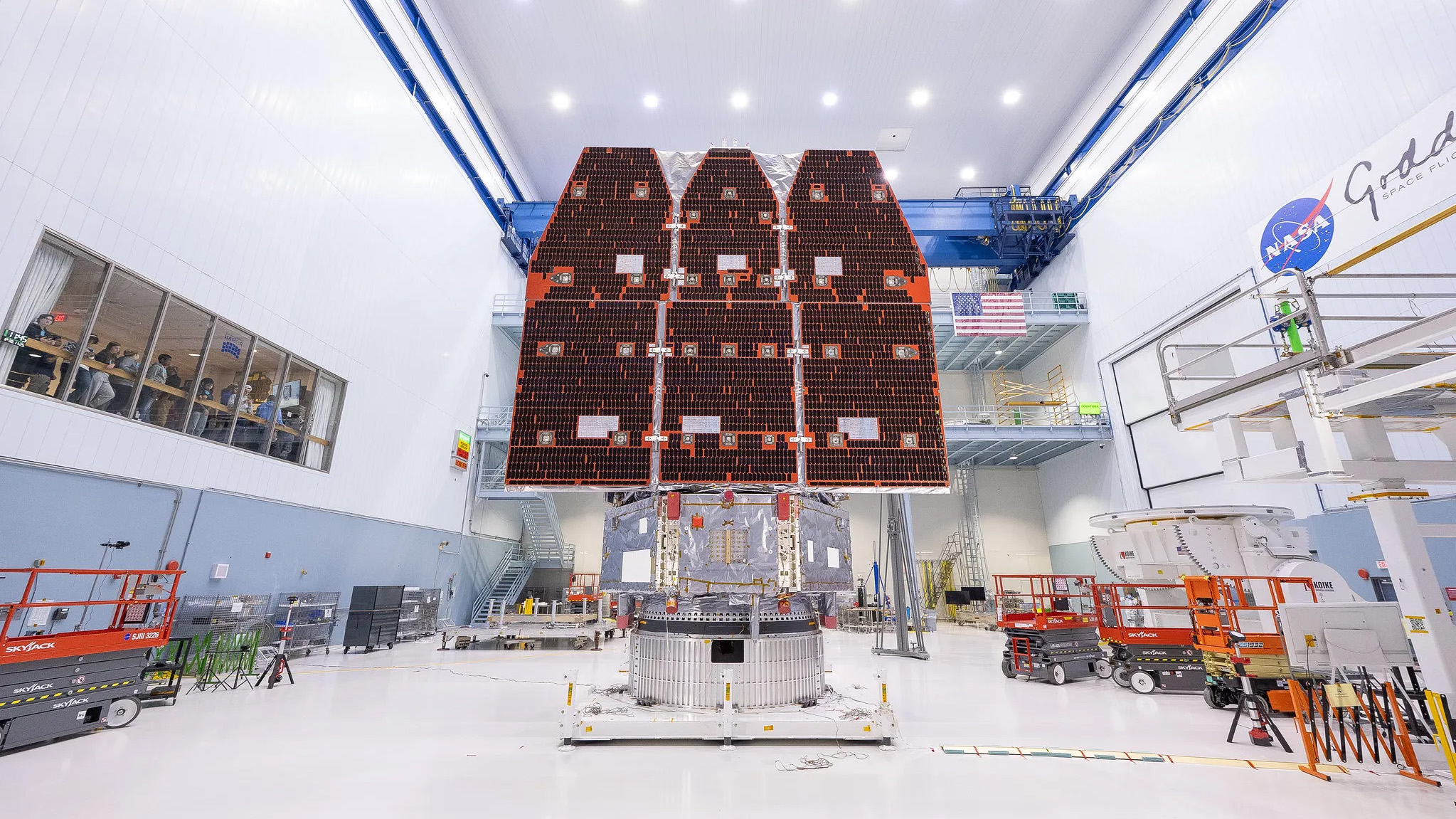
Roman is designed to work in concert with other powerful NASA observatories, including the James Webb Space Telescope and the Chandra X-ray Observatory. As Julie McEnery, Roman's senior project scientist, explained, while Webb and Chandra are excellent at zooming in on specific, rare cosmic events once identified, they often miss the initial discovery. Roman's expansive field of view is expected to change that, leading to the discovery of numerous previously unknown objects and potentially even entirely new classes of celestial phenomena. We could be on the cusp of finding things we haven't even imagined yet!
Once it leaves Earth's atmosphere, Roman will journey to a unique vantage point nearly a million miles away. There, it will utilize two key instruments: a cutting-edge 300.8-megapixel camera capturing light from visible to near-infrared wavelengths, and a sophisticated coronagraph capable of detecting exoplanets that might otherwise be obscured by the glare of their host stars.
The primary mission objectives for Roman are ambitious: to tackle fundamental questions surrounding dark energy, exoplanets, and astrophysics. Despite extensive research, dark energy, which constitutes about 68 percent of the universe, remains a profound mystery. Beyond its scientific endeavors, Roman is also guaranteed to send back breathtaking images of our cosmos, adding to the growing gallery of stunning celestial visuals we've come to expect from our space missions.
Original Source: https://www.engadget.com/science/space/nasa-targets-a-september-launch-for-its-next-big-space-telescope-204140176.html?src=rss
Related News


Comments (0)
✨Leave a Comment
Be the first to comment.